
Map the maintenance process first
A maintenance workstation needs more planning than placing a cabinet beside a bench. Consider how equipment arrives, where it is examined, how removed parts are separated and where completed work goes. Writing the process from start to finish shows what the area needs to support before furniture is selected.
Choose a recurring maintenance task as a representative example. Identify the work order, equipment identity, tools, replacement parts and completion record required. Define the station’s scope clearly. Shared routine activities and work needing special preparation may call for different arrangements. Include the process conditions described in the relevant equipment documentation when deciding what belongs at the station.
Separate incoming, active and completed work
If several jobs can be present at once, it should be clear which parts belong to which item of equipment. Define locations for receiving, active work and completed jobs. Separate furniture is not always necessary; labelled containers and visible status cards may form part of the solution. Choose an approach appropriate to the workload.
Provide containers that can be linked to the equipment identity or work order. Keep reusable, inspection-pending and replacement parts distinguishable. Establish how the current status will be handed over when a job continues on another shift. Short, current records can make the next step clearer than explanations that depend entirely on one person remembering what happened.
Design bench space and tool access together
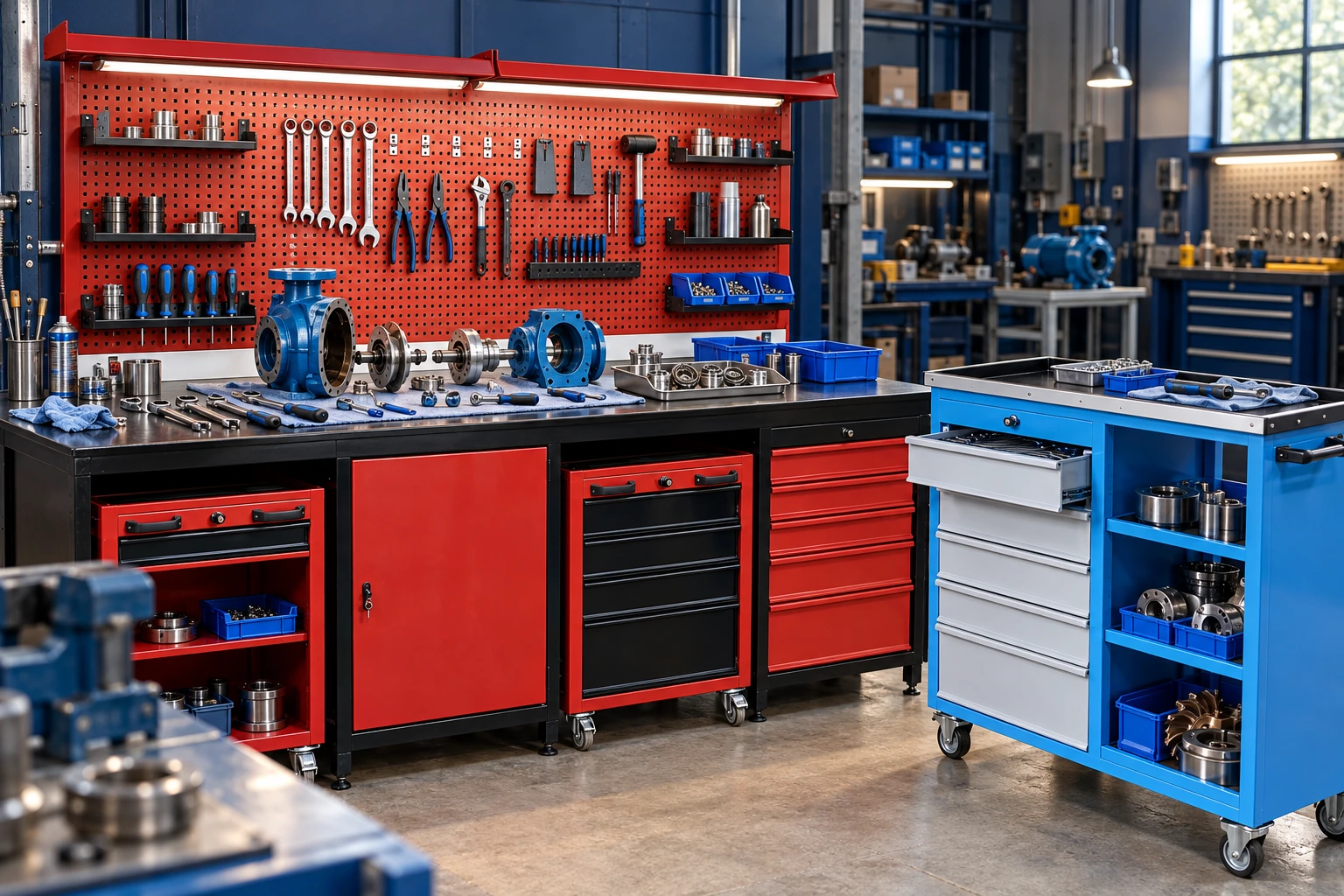
Include a representative workpiece, tools and inspection equipment in the layout. Bosch Rexroth’s workstation planning approach considers working space, material supply and access together. When reviewing the proposed arrangement, check whether the user can approach the work and whether frequently used equipment has an accessible, defined position.
Plan the tool trolley’s parking location as part of the station. Check the effect of open drawers on nearby work and material routes. Give everyday tools permanent locations while allowing a preparation area for job-specific equipment. A trial using the actual work sequence can reveal which accessories contribute to the process and which simply occupy the available surface.
Establish a clear spare-parts routine
Set a boundary around the stock kept at the workstation. Regular consumables and parts ordered for a particular job may need different routines. If a job kit will be prepared before work starts, specify who checks it and against which record. Make the reporting route for missing components clear before the first job arrives.
Avoid confusion between new items and removed parts by using distinct labelled locations. Decide where empty packaging, unused parts and material awaiting inspection will go. Use the relevant product information when choosing cleaning or storage methods. The station layout should support the work while the equipment’s own maintenance instructions continue to define the required procedure.
Run a pilot and test the handover
Try the proposed station with a representative maintenance job before repeating the arrangement elsewhere. Ask users to note unnecessary searching, waiting and missing information. Review the results with the team and update the layout and work records together. Include the end of the job in the trial, not only the hands-on maintenance steps.
- Receiving information, equipment identity and current status.
- Bench layout, tool locations and trolley parking.
- Removed-part separation and replacement-part preparation.
- Reporting of missing, damaged or inspection-pending material.
- Completion, shift handover and preparation for the next job.
Frequently asked questions
Which equipment should be selected first?
Begin with the workflow and a representative job. Use those requirements to decide on the bench, storage and mobile equipment rather than starting with an isolated product.
Can one station support every maintenance task?
Routine activities may be shared, but jobs with special equipment or process conditions need separate assessment. Follow the relevant equipment instructions.