
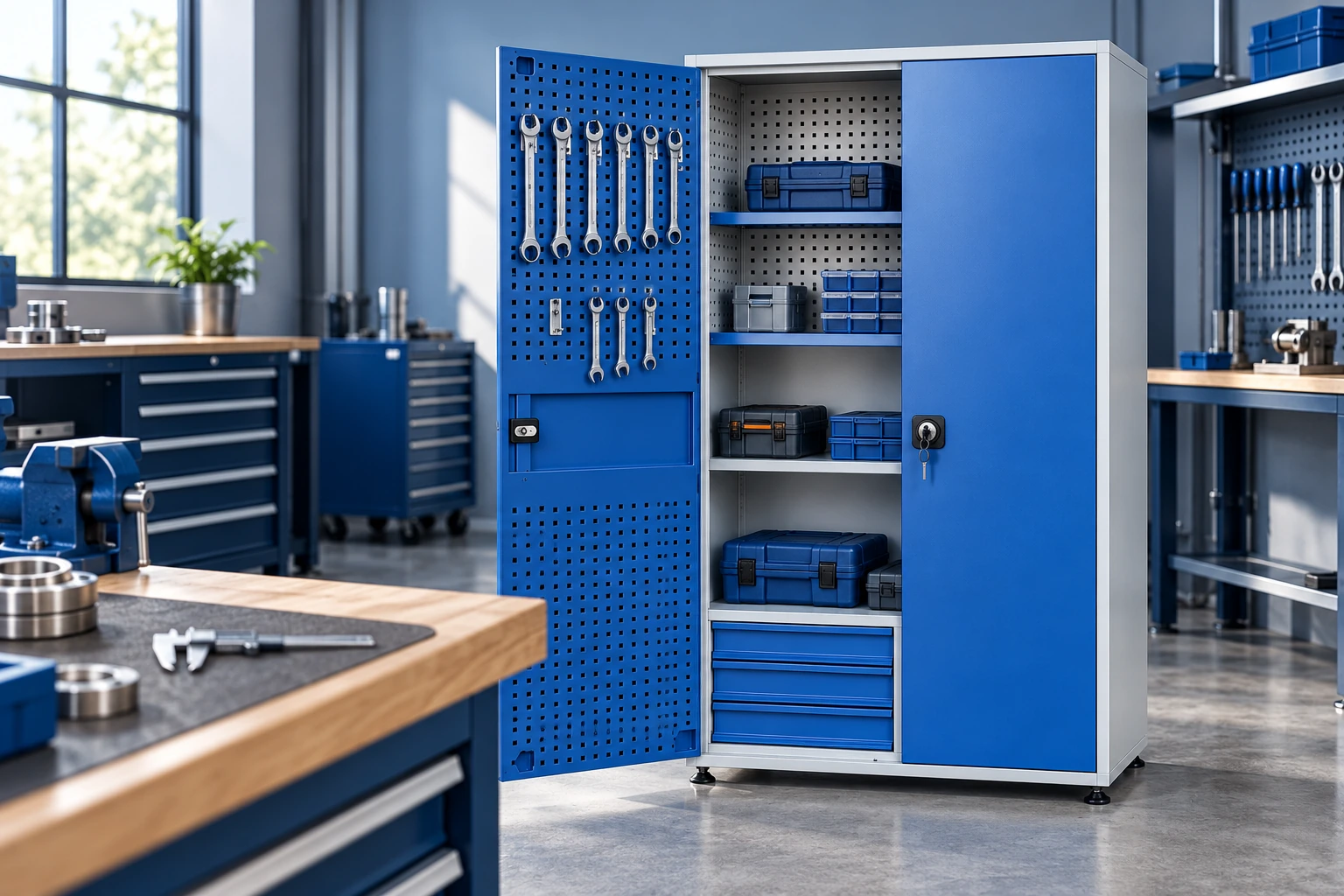
Build an inventory before comparing footprints
Start an industrial storage cabinet project with a list of what it needs to hold. Hand tools, measuring equipment, spare parts and consumables do not necessarily need the same storage arrangement. Group the inventory by frequency of use and physical form. This creates a basis for comparing useful interiors rather than choosing the largest-looking cabinet.
Separate flat items, long tools, boxed components and bulky devices. Record whether each item will be stored loose, in packaging or inside a carrying case. Add approximate quantities and access frequency to the list. This preparation helps you identify where space is genuinely needed and where an oversized cabinet might simply encourage unrelated material to accumulate.
Match shelves and drawers to retrieval
Shelves can be considered for boxes and equipment of different sizes. Drawers may suit smaller tools that benefit from individual compartments. Make the decision around the process of finding, removing and returning an item. An attractive closed cabinet is useful only if its interior supports the way equipment is actually handled.
Check usable shelf depth and internal drawer dimensions separately from overall dimensions. Include boxes, organisers and packaging in the trial arrangement. If two rows of containers are proposed, establish how the rear row will be reached. A simple mock-up with actual items often answers practical questions that a dimension table alone cannot resolve.
Check doors, drawers and installation space
Finding a wall where the cabinet fits is only part of planning. Evaluate the surrounding area with doors or drawers open. Include neighbouring door swings, machine access, electrical equipment and material routes in the drawing. If the cabinet must pass through a narrow doorway during delivery, check the delivery route before finalising the selection.
Confirm placement, assembly and any anchoring requirements in the selected product’s instructions. Verify capacity, shelf configuration, locks and operating limitations for that model. A general description such as industrial storage does not establish suitability for every material or environment. Describe any special application clearly when asking for technical advice or a quotation.
Make shared access understandable
Decide who will use the cabinet and how keys will be managed. Individual ownership of every item may not be necessary, but the reporting route for a missing tool or damaged component should be clear. A readable location list makes the organisation less dependent on one person remembering where everything belongs.
Use shelf or drawer codes alongside item names. Choose labels that can be updated when the inventory changes. Review the arrangement periodically, especially after new equipment arrives. Boxes placed temporarily on a shelf can otherwise become a permanent obstacle, gradually replacing the system that the cabinet was originally purchased to support.
Prepare a complete quotation brief
Attach a proposed interior plan to the inventory and check it with the people who will use the cabinet. This gives suppliers a clearer understanding of the required configuration and makes product comparisons more meaningful. Record unresolved questions so they can be answered for the actual model, rather than through assumptions about the whole range.
- Equipment groups, physical dimensions and expected quantities.
- Shelf, drawer, container and partition requirements.
- Door clearance, user access and the installation layout.
- Key management, labelling and inventory update arrangements.
- Documented capacity, installation and maintenance information.
Frequently asked questions
Should I choose shelves or drawers?
Consider the contents and the retrieval process. Boxed or bulky equipment may call for a different arrangement from small hand tools and measuring instruments.
Can a general storage cabinet hold every type of material?
No. Define the material and environmental requirements, then confirm suitability using the relevant product documentation and manufacturer information.